A Winter Reading Corner, Arranged Around the Window
Arrange a winter reading corner around the window with a comfortable seat, a reachable table and a well-placed lamp for relaxed reading as daylight fades.
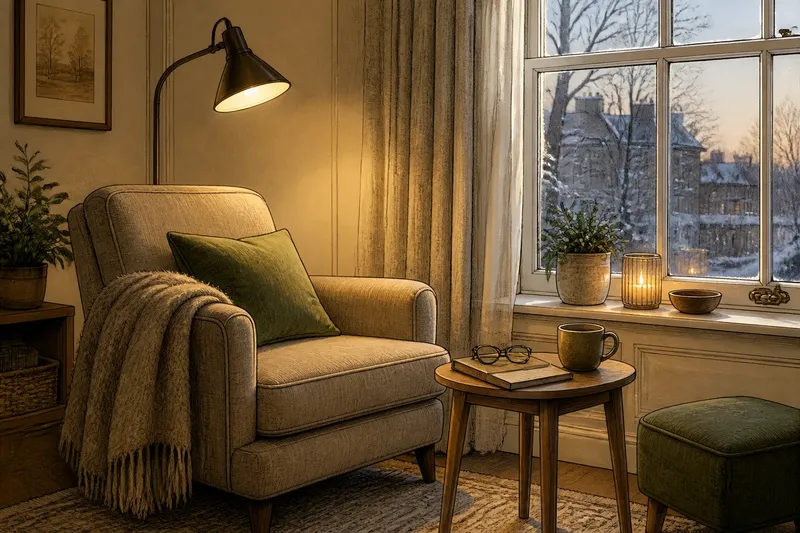
You settle beside the window with a book, but the cushion slips, your tea has nowhere to go and the page falls into shadow as afternoon fades. A winter reading corner around the window can work without a room makeover. The seat, nearby surface and lamp each need to do a different job.
Windows offer a view and changing daylight, but they can also bring glare, cold air or a sense of exposure. The brightest place is not always the most comfortable. Begin with the hours when you are most likely to read.
Read the window’s light and comfort
Spend a few ordinary moments in the room at the time you expect to use the corner. Notice whether direct sun lands on the page, whether activity outside catches your attention and whether you feel a cold movement of air near the frame. This helps you decide whether the chair belongs close to the glass or a little farther in.
A seat need not touch the sill to feel connected to the view. Placing it to one side can keep the window in sight while reducing glare. In a narrow room, a compact chair angled towards the glass may feel less imposing than a wide chair facing it squarely.
Choose a seat for the way you read. A deep armchair may suit a long session, but can crowd a small corner. A simpler chair with a supportive cushion may fit more easily beside curtains or a radiator. Check that the chair leaves the curtains and window handles usable.
Make the seat feel sheltered
A chair close to glass can feel chilly in winter, even when the room is warm. Curtains may soften the area, but fabric caught behind a chair can be awkward to draw. Moving the seat farther into the room or turning it slightly can make it feel less exposed.
Add a cushion with a firm base and keep a folded throw within reach. A footstool can help you settle, but it should not sit where it will be kicked aside or interfere with the window. If you suspect a draught or a repair issue, do not rely on fabric layers to fix it; follow relevant manufacturer guidance and consult a qualified professional where needed.
Say a chair beside a tall sash window feels chilly at dusk. You move it towards the room, angle it towards the view and fold a wool throw over its arm. The expected result is a seat that still feels connected to the window but less exposed to the cold glass.
Choose a surface that suits the seat
A reading corner can feel inconvenient when the nearest table is too far away or too large. A small side table, narrow pedestal or sturdy stool can hold a book and glasses without taking over the space. Choose a stable top that you can reach while seated.
A low table may make you lean; a tall one can dominate a compact chair. If the chair has a broad arm, a tray may hold a book. For a drink, use a separate, stable surface rather than balancing a mug on a cushion or narrow ledge.
Timber can add warmth beside a pale window, while glass may preserve an open feeling. Either can suit the corner if the surface is level and the base feels dependable. Keep the top selective: a book, glasses and one small object are often enough.
Set the lamp for reading after daylight
Window light changes through the day, so a lamp should support the page without shining into your eyes. A floor lamp saves table space; a table lamp gives a more contained pool of light when there is room for a stable base.
Choose a shade that directs light towards the book and hides the bulb from your seated eye. Try the lamp slightly behind or beside you, then check the page from the chair. The text should be clear, without a strong shadow from your hand falling across it.
Light from the left often works well for a right-handed reader, while a left-handed reader may prefer light from the right. Treat this as a starting point, not a rule: the page angle, lamp shape and other light sources affect the result. Follow the lamp maker’s guidance when choosing a bulb and fitting.
What makes a window reading corner comfortable?
Should the chair face the window?
Not necessarily. An angle can keep the view in sight while reducing glare. Sit in the chair and check whether you can read comfortably and see enough of the room.
What can I do if the window is too bright?
Move the chair out of the direct beam or turn it so sunlight reaches the page from the side. A sheer curtain may soften the light while keeping the room bright, provided the window remains easy to use.
Where should I place the reading lamp?
Put it beside or slightly behind the reader, with its beam directed at the book rather than the face. Check the light from the chair, since a position that looks right from the doorway may still cause glare.
Can a small reading corner work without a side table?
Yes, if a stable chair arm or suitable tray can hold what you need. Use a separate, steady surface for a drink rather than balancing it on soft furnishings.
Check the details before settling in
- Check whether direct sun falls on the page; if it does, move the chair out of the beam or add a suitable sheer curtain.
- Check whether the seat catches the curtains; if it does, shift or angle the chair, and choose a narrower seat if the fabric still cannot draw.
- Check whether cold air or the cool glass makes the chair uncomfortable; if it does, move the seat farther in and use a throw, or seek qualified help if a window repair may be needed.
- Check whether the table is reachable without leaning; if it is not, bring it closer or choose a smaller, better-positioned surface.
- Check whether a mug would sit securely; if it would not, use a stable table rather than a chair arm or decorative stand.
- Check whether the lamp shines into your eyes or shadows the text; if it does, reposition it beside or behind you, or choose a shade that directs light towards the page.
- Check whether the window handles remain accessible; if they do not, move the chair or select a less bulky seat.
Imagine a reader has a compact armchair, a narrow timber table and a floor lamp, but the table is beyond easy reach and the lamp shines into their face. They first angle the chair towards the window and move the table beside its arm; then they turn the lamp so its shade directs light to the book. The resulting arrangement keeps the view, places the book and mug within reach, and makes the page easier to see. The tradeoff is that the chair now occupies a little more of the corner, so the reader checks that the window can still be opened.
Let the corner suit an ordinary evening
A reading spot should work when you use it, not only when its cushions are arranged for display. Keep the lamp switch easy to reach and make the throw simple to pick up. Let the window guide the arrangement without requiring every cushion or accessory to match it.
Use a repeated material or a muted colour to link the chair and curtains, or let the lampshade provide a quiet contrast. If you keep reaching for the book, bring the surface closer; if you turn away from the light, adjust the lamp; if the chair feels cold, move it away from the glass.
A winter reading corner around the window feels settled when the chair supports your reading, the surface holds what you need and the lamp carries the page beyond daylight. Keep the window easy to use, and the view can remain part of the room without dictating every choice.